
Your Scalp Is Skin Too: What CBD Can and Cannot Do for Dandruff and Flaking
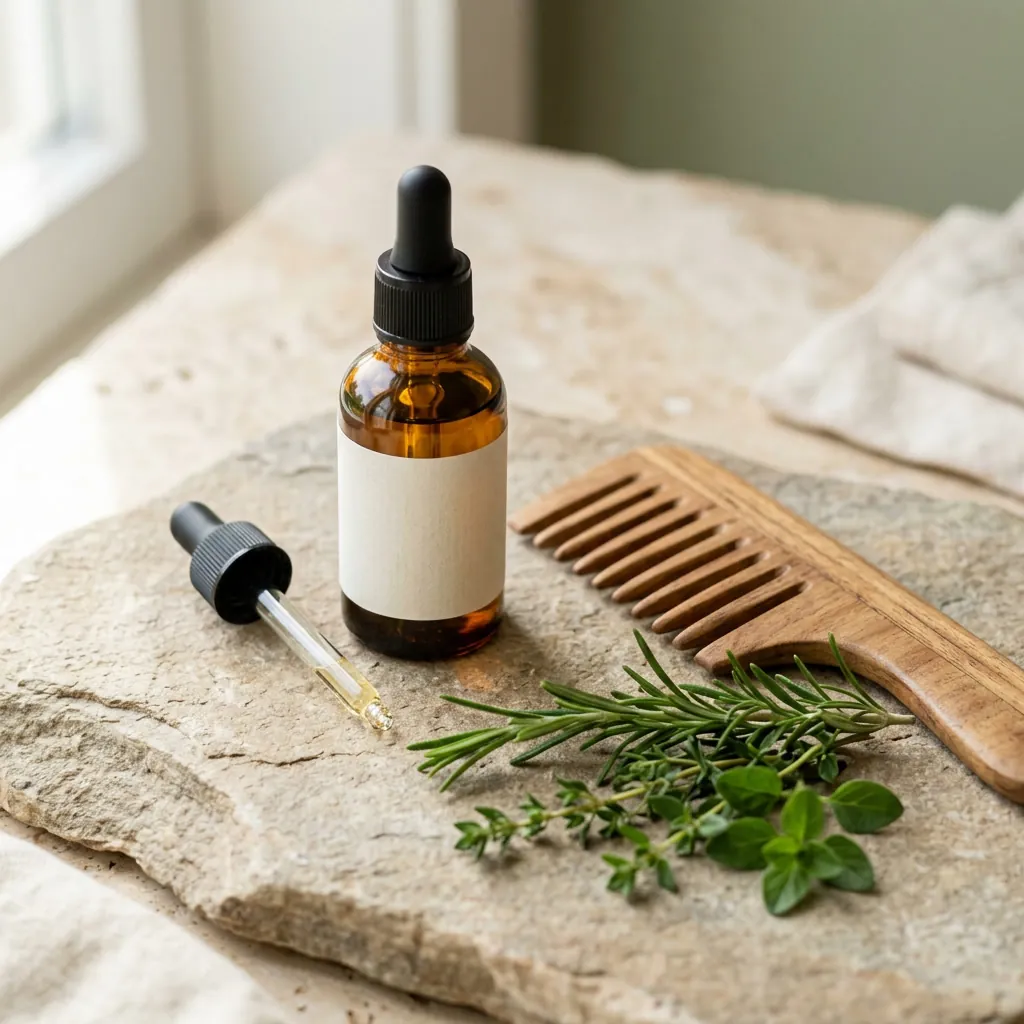
You have probably seen the bottles. A dropper of golden oil with a label promising a calmer, cleaner scalp. Maybe a shampoo with hemp leaf graphics and a price tag that suggests something clinical is happening inside. If you have flakes on your collar and an itch you cannot stop scratching, that bottle is very tempting.
Here is the part the label leaves out. Your scalp is skin, the same organ that covers the rest of you, just with a lot more hair follicles and a lot more oil. Dandruff and its inflammatory cousin, seborrheic dermatitis, are not mysterious. They are reasonably well understood, and the treatments that work have been around for decades.
CBD may eventually earn a place in scalp care. The early science is interesting and genuinely worth watching. But the gap between what is being studied and what is being sold is wide enough to park a truck in.
This is an honest look at that gap. What CBD might do, what has actually been tested in humans, and what to do if your scalp is flaking right now.
What Seborrheic Dermatitis Actually Is
The word dandruff gets used for two different things, and the difference matters.
Simple dandruff is scaling without much redness or inflammation. Seborrheic dermatitis is the inflammatory version. You get greasy yellowish scales, redness, and itching, usually along the hairline, behind the ears, in the eyebrows, and sometimes on the sides of the nose. On the scalp it can be severe enough to cause hair shedding from scratching and inflammation, though it does not usually cause permanent hair loss on its own.
Three things drive it, and they tend to reinforce each other:
- Malassezia yeast. This is a genus of fungus that lives on everybody's skin, including yours right now. It feeds on sebum. In people with seborrheic dermatitis, the immune system reacts to it more aggressively.
- Sebum. Oil production gives the yeast its food supply. This is why the condition flares in oily areas and why puberty and stress often make it worse.
- Inflammation and a disrupted barrier. The visible redness and itch are immune activity, not just dead skin sitting there.
That three part picture is the reason antifungal shampoos work. Reduce the yeast, and the inflammation calms down. It is also the reason a product that only soothes without touching the yeast tends to disappoint.
Why CBD Shows Up in Scalp Products at All
CBD has two properties that make formulators reach for it. It is lipophilic, meaning it mixes well with oils and sebum, and it has a reasonable safety profile in topical use for most people. It also has a marketing story that sells.
The biological rationale is not silly. Cannabidiol interacts with the endocannabinoid system, which is present in skin, including sebaceous glands and hair follicles. Skin has cannabinoid receptors, and sebocytes, the cells that make oil, respond to cannabinoid signaling in lab work. That gives a plausible mechanism for sebum regulation and inflammation control.
Plausible mechanism is not the same as proven effect in a person with a flaky scalp. A lot of dermatology marketing skips that distinction.
What CBD Is Being Studied For in Skin
A 2025 review in Biomolecules by Rusu and colleagues looked at topical CBD across dermatology and is a useful map of where the field actually stands. The review covers CBD in acne, atopic dermatitis, psoriasis, wound healing, and sebum related conditions. The recurring themes are inflammation, sebum, and barrier function.
Three mechanisms come up again and again:
Sebum regulation. Lab studies suggest CBD can reduce sebocyte proliferation and lipid production. If that holds in living skin, it is directly relevant to a scalp condition fueled by oil.
Anti-inflammatory signaling. CBD has been shown to dampen inflammatory mediators in skin models, including pathways involving cytokines and TRP channels. This is the same general territory covered in our breakdown of CBD for rosacea, where redness and barrier dysfunction are the main problems.
Barrier support. Some topical CBD work points toward improved hydration and reduced transepidermal water loss, which matters because a damaged barrier itches more and reacts to more things.
Worth saying plainly, the Biomolecules review is a review. It synthesizes lab work, animal work, and a limited number of human studies. It does not tell you that a specific shampoo at a specific strength will fix your scalp.
The One Real Human Trial (and Its Very Narrow Population)
This is the strongest piece of human evidence available, and it deserves to be described precisely.
A 2024 randomized trial published in JMIR Dermatology by Weber and colleagues tested oral CBD in patients with Parkinson disease who also had seborrheic dermatitis. That is a real randomized design, which puts it ahead of almost everything else in this space. Seborrheic dermatitis is common in Parkinson disease, often more severe than in the general population, which is why the researchers chose that group.
The results were encouraging enough to justify more work. But look at what the study can and cannot tell you.
What it supports. CBD has plausible activity against seborrheic dermatitis in humans, at least in this population, at the dose and formulation tested.
What it does not support. It does not tell you that a topical CBD shampoo works. It was oral CBD, not a leave-on scalp product. It does not tell you the effect generalizes to people without Parkinson disease, whose sebum production, neurological status, and skin behavior may differ. And it does not establish a dose you can copy from a bottle on a shelf.
The key limitation in one sentence: one positive randomized trial in a narrow, neurologically atypical population is a green light for more research, not a prescription for your scalp.
If you want the broader context on how CBD behaves in the body and what it interacts with, our CBD safety guide covers absorption, liver metabolism, and medication interactions. That last point matters more for oral CBD than for a shampoo, but it matters.
The Hair Regrowth Case Series Is Not Proof
There is a 2023 paper in the International Journal of Trichology by Smith and colleagues describing hair regrowth in a small case series using a novel hemp extract. It gets cited constantly in scalp CBD marketing.
A case series is the weakest common form of clinical evidence. It is a description of what happened to a handful of people who were not compared to anyone else. There is no control group, no blinding, no way to separate the product from seasonal shedding patterns, from concurrent treatments, or from the natural course of the condition. People who seek out an experimental hair product and stick with it are also a self-selected group.
That does not make the observation worthless. It makes it a hypothesis. Case series generate questions, they do not answer them. If a brand shows you that paper as proof, they are either confused about evidence or hoping you are.
Hair density is a separate topic with its own thin evidence base, which we covered in CBD for hair growth. The short version is the same: interesting early signals, no convincing controlled human data yet.
Why the Scalp Evidence Is Thinner Than the Skin Evidence
Notice something about the citations above. The human trial was oral. The review was general topical dermatology. The hair paper was a case series. None of them is a randomized trial of a topical CBD product on seborrheic dermatitis of the scalp.
That gap exists for boring, practical reasons. Scalp trials are hard to run. You need a validated scale for scaling and erythema, you need to control what else participants put on their hair, and you need a formulation that actually stays in contact with skin long enough to do something. Shampoo is a rinse-off product with a contact time measured in minutes. That is a tough delivery problem for any active ingredient, CBD included.
So when a brand says "clinically studied CBD," ask what was studied. Molecule, route, population, and formulation all matter. A study of oral CBD in Parkinson patients is not a study of their rinse-off shampoo.
What CBD Topicals Can Realistically Do for a Flaky Scalp
Setting the hype aside, here is a fair description of the possible role.
CBD is best understood as a supporting ingredient, not a primary treatment. If your scalp is oily, inflamed, and itchy, a well formulated CBD serum or leave-on product might help with comfort and calm the irritation component. It will not reliably clear a Malassezia overgrowth on its own, because the evidence for antifungal activity in real world scalp conditions is not there.
Where it fits reasonably:
- As a soothing layer between medicated washes, especially if conventional shampoos leave you dry and irritated
- As an option for mild flaking that has not progressed to redness and greasy scale
- As a comfort product during a flare, alongside treatment rather than instead of it
Where it does not fit: as a replacement for ketoconazole, selenium sulfide, zinc pyrithione, or ciclopirox when you have actual seborrheic dermatitis. Those have decades of controlled data. CBD does not.
If you are already building a topical routine, the same sebum and inflammation logic applies on facial skin, and the CBD topicals collection is where to compare formats if you decide to try one.
How to Use a CBD Scalp Product Without Wrecking Your Scalp
If you are going to experiment, experiment carefully. Scalp skin is thin, hair follicles are dense, and a reaction there is miserable.
Patch test first, and patch test properly. Apply a small amount behind your ear or on the inner forearm, wait 24 to 48 hours, and check for redness, burning, or bumps. Do this with every new product, even one you have used before in a different batch. Do it again if the formulation changes.
Read the whole ingredient list, not just the CBD number. Many scalp products contain fragrance, essential oils, menthol, or tea tree oil. Those are common contact irritants and allergens. A reaction you blame on CBD may be coming from the peppermint.
Start with low frequency. Two or three times a week rather than daily, then build up if your scalp tolerates it.
Do not layer actives aggressively. If you are using a medicated antifungal shampoo, do not stack a strong acid toner, a CBD serum, and a scrub in the same routine. Give each thing a chance to show whether it helps or hurts.
Stop if it burns. A little warmth is common with some formulations. Burning, stinging that persists, or new redness is not a sign it is working.
The Irritation and Interaction Points People Skip
Topical CBD is generally well tolerated in the published literature, with the most common complaints being mild irritation and dryness. That is reassuring but not a guarantee for your specific skin, especially if you have seborrheic dermatitis, where the barrier is already compromised.
A few specific cautions:
- Damaged skin absorbs more. If your scalp is raw from scratching, you are not working with intact barrier function. Go slower.
- Oral CBD is a different risk category. It interacts with liver enzymes that process several medications, including some blood thinners and epilepsy drugs. Our article on CBD drug interactions goes deeper. A shampoo is unlikely to matter here. A swallowed capsule is.
- Pregnancy and breastfeeding. There is not enough safety data. Talk to a clinician before using CBD in any form.
- Product quality varies. CBD content on labels does not always match what is in the bottle. Third party testing matters.
When CBD Is the Wrong Tool
Be honest with yourself about what you are treating.
If you have greasy yellow scale, redness along the hairline, itching that wakes you up, or patches behind the ears, that is seborrheic dermatitis, and it has effective treatment. See a clinician or start an over the counter antifungal shampoo with a real active ingredient. CBD is not a substitute, and delaying proper treatment while you try a boutique oil is how a manageable condition becomes a stubborn one.
If your scalp is flaking with silvery scale on well defined plaques, or you have joint pain and nail changes, that pattern suggests psoriasis rather than seborrheic dermatitis. Psoriasis needs its own approach, and we cover the overlap in CBD for psoriasis.
If the itch is intense and your scalp is weeping or crusted, or you are losing patches of hair, that needs a diagnosis, not a product.
And if you have tried three CBD scalp products with no change, the answer is probably not a fourth one at a higher price.
Action Steps
- Identify what you actually have. Flaking alone is dandruff. Redness, greasy scale, and itch along the hairline point to seborrheic dermatitis.
- If it is seborrheic dermatitis, start with an antifungal shampoo containing ketoconazole, selenium sulfide, zinc pyrithione, or ciclopirox. Use it as directed for at least two to four weeks before judging.
- Patch test any CBD scalp product for 24 to 48 hours before wider use.
- Choose a leave-on serum or light oil over a rinse-off shampoo if you want contact time, and check the full ingredient list for fragrance and essential oils.
- Use it two or three times a week to start, and stop at the first sign of burning or new redness.
- Keep a two week note of what you used, how often, and what changed. Patterns are hard to see from memory.
- If there is no improvement in four weeks, or if it worsens, see a dermatologist.
Bottom Line
Your scalp is skin, and dandruff with inflammation is a yeast and sebum problem that already has treatments with real evidence behind them. CBD has a credible mechanistic story for sebum and inflammation, and one genuinely randomized human trial, but that trial used oral CBD in people with Parkinson disease. That is a promising signal, not proof for the bottle in your bathroom. The hair regrowth case series is a hypothesis, not a result.
CBD may earn a supporting role in scalp care for comfort and mild irritation. It has not earned a starring one. If your scalp is flaking badly, treat the cause first. Then, if you want to experiment, patch test, start slow, and keep your expectations calibrated to what has actually been shown.
Educational and information only, not medical advice. The app sells nothing and contains no affiliate links. Check with your doctor before changing anything about your health routine.